

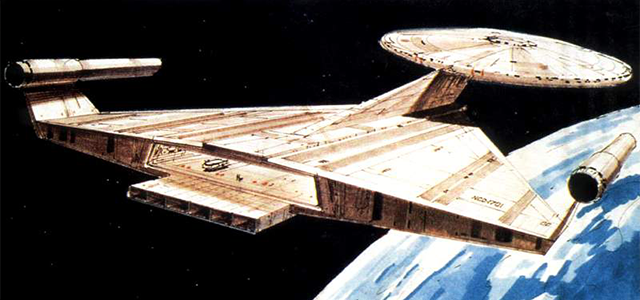
After a year of hearing Star Trek movie pitches and ideas from creator Gene Roddenberry and other science fiction writers, Paramount executives decided to take matters into their own hands. In July 1976, they named Jerry Isenberg to be the Executive Producer of a new Star Trek movie project.
Hiring the Team
Isenberg quickly hired two writers to work on a treatment, Chris Bryant and Alan Scott. In September 1976, they get to work and turn in a treatment at the end of the month called The Planet of the Titans. Finally, Paramount has an idea it wants to produce and execs order the writers to begin working on a script.
In the meantime, Isenberg began looking for a director. He talked with some of the biggest names of the day: Francis Ford Coppola, Steven Spielberg, George Lucas and Robert Wise. But each director turned him down because of commitments to other film projects. But Isenberg eventually found Phillip Kaufman who agreed to direct.
Ralph McQuarrie
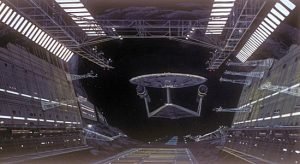 McQuarrie was hired to develop concept art for the project. He had just finished a job working for George Lucas on a science fiction project that had not been released yet called Star Wars. McQuarrie’s art shows us a Star Trek that was very different from what we saw on our TV screens.
The Legacy of The Planet of the Titans
While we never had the chance to see this movie, the impact of McQuarrie’s illustrations live on today. His redesign of the U.S.S. Enterprise is the basis for the U.S.S. Discovery, the ship featured in the newest series of the franchise, Star Trek Discovery.
Planet of the Titans came the closest to actually being produced. After Bryant and Scott turned in their finished script in March 1977, Paramount rejected it in April and went on to cancel the project permanently in May.
The Impact of Star Wars
Just a few short days after cancelling Titans, the movie Star Wars opened, and suddenly it seemed like Hollywood was transformed over night.
But Paramount did not understand the impact of this film, nor did it understand the sentiment of sci-fi fans in the 70s. Execs at the studio thought that the success of Star Wars was a fluke. They also misjudged the sentiment of science fiction fans, believing that Wars had satiated their appetite for this type of entertainment. They believed that they had missed their window for a science fiction film and, as a result, decided to move Star Trek to their TV division.
Just two weeks after Star War’s opening, Paramount announced its intention to launch a new television network and a new Star Trek show would anchor its schedule. We will tell that story in another episode.
Image: Ottens.co.uk/ForgottenTrek
To listen to this episode click the Play button:

Podcast: Play in new window | Download
Subscribe: RSS
Be First to Comment