

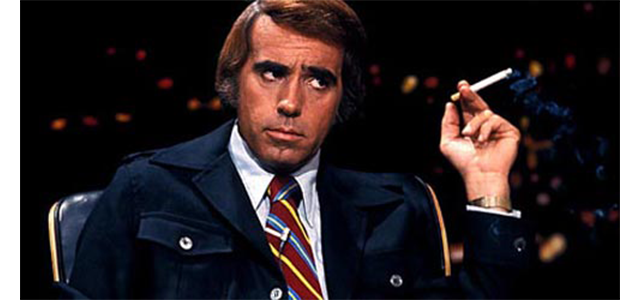
As Star Trek grew in popularity throughout the 1970s, it gained the attention of media professionals who normally would have ignored it. But the numbers of convention attendees, merchandise sales, and the ratings in syndication could no longer be ignored by 1976! In February of that year, The Tomorrow Show with Tom Snyder aired an episode that examined the popularity of Star Trek.
Co-hosts Bob Turner and Kelly Casto discuss this program.
The Tomorrow Show
The Tomorrow Show had its origins in the 1971 Public Health Cigarette Smoking Act. That law banned cigarette advertising on television. The lost ad revenue for each of three networks was significant. NBC execs come up with the idea of extending the broadcast day by an hour to try to recoup some of the lost revenue. They came up with the idea of a late, late talk show that would examine topics and people of interest in depth.
The Tomorrow Show was born.
At its helm was NBC reporter and anchor Tom Snyder. He was a veteran radio and TV news professional whose style worked perfectly for the show. Without a studio audience, the interviews took on a quiet dignity and at times a solemn seriousness.
Snyder’s best remembered for his one-on-one interview with John Lennon in 1975. It was the last TV interview the former Beatle gave before his death in 1980.
The Star Trek Episode
In February 1976, The Tomorrow Show tackled the Star Trek phenomenon. On the set with Snyder were DeForest Kelley, Jimmy Doohan, Walter Koenig, writer Harlan Ellison and Star Trek fan and convention holder Al Schuster. Gene Roddenberry was invited, but was unable to attend.
It’s apparent as you watch this episode that Tom Snyder hasn’t watched much Star Trek, even admitting that fact at one point. But he does his best to try to get to the basis of the phenomenon.
Each Trek star shared their take on why the show was experiencing a resurgence, and their favorite memories from its production. They also talked about the impact it had on their careers. Unfortunately, it wasn’t particularly good for those on the set who were each experiencing the effects of being type-cast.
Writer Harlan Ellison, who wrote one of Trek’s most famous episodes, City on the Edge of Forever, said, “I was developing diabetes from all the sweetness and light,” speaking about the positive comments from the cast. He went on to say that the show had “Mucked it up badly” when Roddenberry rewrote his episode and that he found the show “light weight” in terms of its moral messages.
As expected, the cast took exception to his comments on several occasions.
The entire show can be viewed on YouTube.
Image: http://bullmurph.com/
To listen to this episode click the Play button.

Be First to Comment